
MICRO BIOLOGY

What does a Microbiologist do?
Microbiologists study the microscopic organisms that cause infections, including viruses, bacteria, fungi and algae. They focus on the identification and growth of these organisms in order to understand their characteristics, with the overall aim to prevent, diagnose and treat infectious diseases.
Work Environment
Microbiologists work in laboratories and offices, where they conduct scientific experiments and analyze the results. Most microbiologists work full time and keep regular hours.
The work of microbiologists is relevant in a range of fields, including pharmaceuticals, biotechnology and agriculture. The majority of the work is carried out in hospitals, laboratories and offices, with the main employers being environmental organisations, the National Health Service, the pharmaceutical and water industries, and forensic science laboratories. Microbiology is a broad subject which overlaps with other life sciences, such as immunology and biochemistry.
How to become a Microbiologist
To become a microbiologist, a related degree in a subject such as biology, microbial science or biomedical science is essential. Laboratory experience, as well as becoming a member of a relevant society, is also generally needed. For employment with the National Health Service, or at universities, an accredited three-year training programme leading to an MSc in microbiology is required.
What do they do day to day?
Typical work activities include identifying microorganisms and tracking them in a range of environments, testing samples, developing new medicines, vaccines and other methods to prevent the spread of disease, as well as managing and overseeing laboratory work. Other roles can also include collecting samples from different types of environments, quality control in manufacturing, producing reports and advising external bodies.
A common feature of a microbiologist’s work is repeat experiments in order to establish accurate data, whilst using a range of analytical techniques, powerful electron microscopes and specialist computer software. Some of the key skills required include meticulous attention to detail and the ability to work independently, as well as within larger research teams.
- Published in Services
3D – 4D ECHO
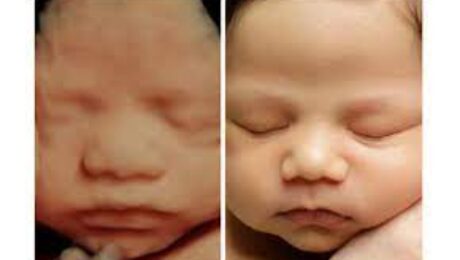
In the last decade 3D and live 3D ultrasound or the so called 4D (3D/4D) in examination of the fetal heart evolved very rapidly with the development of the new technique called Spatiotemporal Image Corelation – STIC, which enables the aquisition of a volume data concomitent with the beating heart. It appears that 3D/4D ultrasound in fetal echocardiography may make an important contribution to the diagnosis of congenital heart disease, to interdisciplinary management, to parental counseling and to medical personal training.
INTRODUCTION
Three dimensional (3D) and four dimensional (4D) applications in the scanning of fetal heart has largely developed in the last ten years. No other organ or system has this progress so evident that as in the fetal cardiovascular system. Congenital heart disease (CHD) is the most common group of malformations in neonates, occuring in 8 per 1000 live births (1). In 2006 the International Society of Ultrasound in Obstetrics and Gynecology (ISUOG) published practice guidelines for the screening of CHD during the second trimester of pregnancy and outlined two levels for the screening of low risk fetuses for heart anomalies. The first level is the basic 4-chamber view and the second level is the extended basic scan which includes examination of the arterial outflow tracts (2). Also the term “fetal echocardiogram” refers to a detailed sonographic evaluation of the fetal heart which is performed by a specialist in prenatal diagnosis of CHD.
There are several imaging modalities that can be used to evaluate the fetal heart anomalies, from M-mode techniques, to color Doppler and to the use of the new 3D/4D ultrasonography. The new technological development allows a real-time 3D/4D of the examination of the fetal heart (3). These ultrasound techniques can have a major contribution to the understanding of normal and abnormal fetal heart and can also extend the benefits of the prenatal cardiac screening. With the introduction of the so called “virtual planes” to fetal cardiac examination, we are able to obtain views of the fetal heart that are not generally accesible with the use of standard 2D examination (4). ❑
3D/4D TECHNIQUES IN FETAL CARDIAC EXAMINATION
There are three steps that must be followed when we are using 3D/4D fetal echocardiography: volume aquisition, volume display and volume manipulation.
Volume acquisition
The volume acquisition can be done either static 3D, either on-line 4D (direct volume scan), either spatiotemporal image correlation-STIC- (off-line 4D which is an indirect volume scan).
Spatio-temporal image correlation acquisition (STIC) is an automated volume acquisition with the array of the transducer by performing a slow single sweep, recording a single 3D data consisting of many 2D frames one behind the other. The volume of interest (VOI) is set for a period of time between 7.5 sec to 30 sec (usualy 10 sec), and a sweep angle between 20 to 40° (usually 25°). After this, the system processes the volume data and detect systolic peak which are used to calculate fetal heart rate. The systolic peaks define the heart cycle. The resultant 40 consecutive volumes represents a reconstructed complete heart cycle. One can extract from that volume acquisition any convenient plane we want, which means that from a single volume we can get the image of 4-chamber view, or 5-chamber view, or three vessels etc (5). In other words, the acquisition of a volume is realized in 2 steps: in the first step data are aquired by a single automatic volume sweep and in the second step the system analyzes the data in their spatial and temporal domains and processes a 4D sequence (Figure (Figure1).1). STIC can be used with gray scale, or color Doppler, or power Doppler, or B-flow fetal echocardiography (6).

- Published in Services
PULMONARY FUNCTION TEST
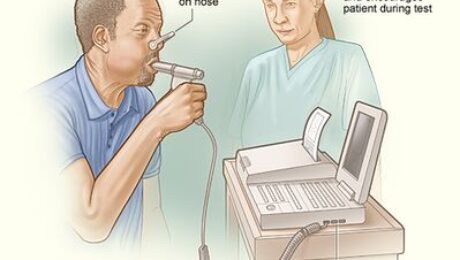
Pulmonary function tests (PFTs) are noninvasive tests that show how well the lungs are working. The tests measure lung volume, capacity, rates of flow, and gas exchange. This information can help your healthcare provider diagnose and decide the treatment of certain lung disorders.
There are 2 types of disorders that cause problems with air moving in and out of the lungs:
- Obstructive. This is when air has trouble flowing out of the lungs due to airway resistance. This causes a decreased flow of air.
- Restrictive. This is when the lung tissue and/or chest muscles can’t expand enough. This creates problems with air flow, mostly due to lower lung volumes.
PFT can be done with 2 methods. These 2 methods may be used together and perform different tests, depending on the information that your healthcare provider is looking for:
- Spirometry. A spirometer is a device with a mouthpiece hooked up to a small electronic machine.
- Plethysmography. You sit or stand inside an air-tight box that looks like a short, square telephone booth to do the tests.
PFT measures:
- Tidal volume (VT). This is the amount of air inhaled or exhaled during normal breathing.
- Minute volume (MV). This is the total amount of air exhaled per minute.
- Vital capacity (VC). This is the total volume of air that can be exhaled after inhaling as much as you can.
- Functional residual capacity (FRC). This is the amount of air left in lungs after exhaling normally.
- Residual volume. This is the amount of air left in the lungs after exhaling as much as you can.
- Total lung capacity. This is the total volume of the lungs when filled with as much air as possible.
- Forced vital capacity (FVC). This is the amount of air exhaled forcefully and quickly after inhaling as much as you can.
- Forced expiratory volume (FEV). This is the amount of air expired during the first, second, and third seconds of the FVC test.
- Forced expiratory flow (FEF). This is the average rate of flow during the middle half of the FVC test.
- Peak expiratory flow rate (PEFR). This is the fastest rate that you can force air out of your lungs.
Normal values for PFTs vary from person to person. The amount of air inhaled and exhaled in your test results are compared to the average for someone of the same age, height, sex, and race. Results are also compared to any of your previous test results. If you have abnormal PFT measurements or if your results have changed, you may need other tests.
- Published in Services
FULL BODY COLOR DOPPLER
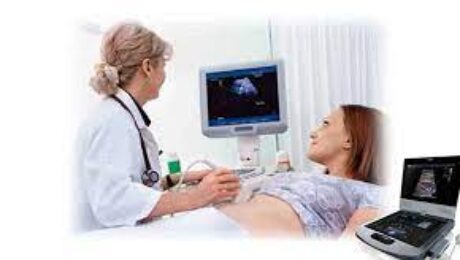
Color Doppler is an ultrasound-based diagnostic imaging technique used to visualize subcutaneous body structures including tendons, muscles, joints, vessels and internal organs for possible Pathology or Lesions.
It is used to provide visualization of the blood flow, using color processing to add color to the image so that a doctor can clearly see what is happening inside the body.
- Published in Services
DEXA SCAN
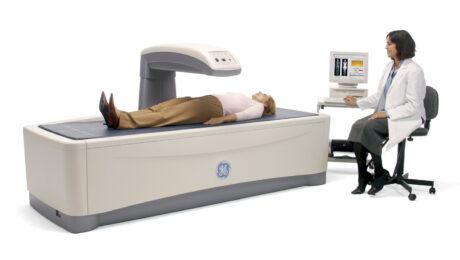
A DEXA scan is a special type of X-ray that measures bone mineral density (BMD).
DEXA stands for “dual energy X-ray absorptiometry”. This type of scan is also often known as DXA, or “dual X-ray absorptiometry”. It’s also sometimes referred to as a bone density scan or a bone densitometry scan.
DEXA scans are often used to diagnose osteoporosis (when the bones become weak and fragile, and are more likely to break).
They can also be used to assess the risk of osteoporosis developing in women aged over 50 and in men over 60.q
As well as being quick and painless, a DEXA scan is more effective than normal X-rays in identifying low bone mineral density.
- Published in Services
MAMMOGRAPHY
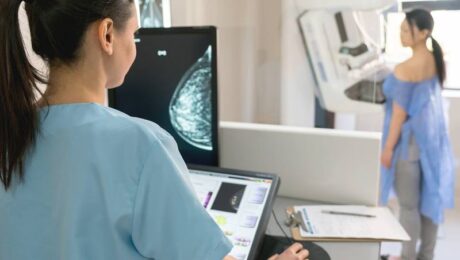
A mammogram is an x-ray picture of the breast. It can be used to check for breast cancer in women who have no signs or symptoms of the disease. It can also be used if you have a lump or other sign of breast cancer.
Screening mammography is the type of mammogram that checks you when you have no symptoms. It can help reduce the number of deaths from breast cancer among women ages 40 to 70. But it can also have drawbacks. Mammograms can sometimes find something that looks abnormal but isn’t cancer. This leads to further testing and can cause you anxiety. Sometimes mammograms can miss cancer when it is there. It also exposes you to radiation. You should talk to your doctor about the benefits and drawbacks of mammograms. Together, you can decide when to start and how often to have a mammogram.
Mammograms are also recommended for younger women who have symptoms of breast cancer or who have a high risk of the disease.
When you have a mammogram, you stand in front of an x-ray machine. The person who takes the x-rays places your breast between two plastic plates. The plates press your breast and make it flat. This may be uncomfortable, but it helps get a clear picture. You should get a written report of your mammogram results within 30 days.
- Published in Services
ELECTROCARDIOGRAM (ECG)
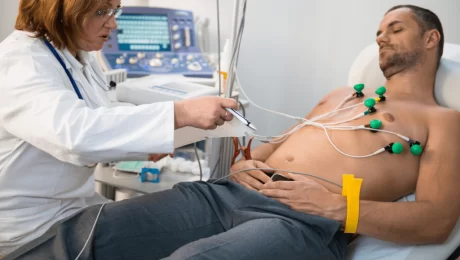
The electrocardiogram (ECG) is a diagnostic tool that is routinely used to assess the electrical and muscular functions of the heart. While it is a relatively simple test to perform, the interpretation of the ECG tracing requires significant amounts of training. Numerous textbooks are devoted to the subject.
The heart is a two stage electrical pump and the heart’s electrical activity can be measured by electrodes placed on the skin. The electrocardiogram can measure the rate and rhythm of the heartbeat, as well as provide indirect evidence of blood flow to the heart muscle.
A standardized system has been developed for the electrode placement for a routine ECG. Ten electrodes are needed to produce 12 electrical views of the heart. An electrode lead, or patch, is placed on each arm and leg and six are placed across the chest wall. The signals received from each electrode are recorded. The printed view of these recordings is the electrocardiogram.
- Published in Services
ELECTROMYOGRAPHY (EMG)
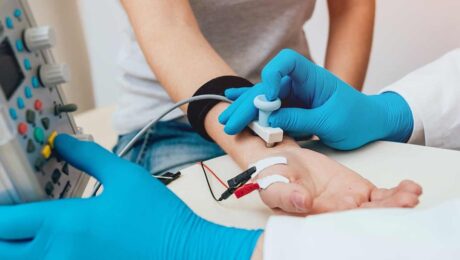
lectromyography (EMG) is a diagnostic procedure to assess the health of muscles and the nerve cells that control them (motor neurons).
Motor neurons transmit electrical signals that cause muscles to contract. An EMG translates these signals into graphs, sounds or numerical values that a specialist interprets.
An EMG uses tiny devices called electrodes to transmit or detect electrical signals.
During a needle EMG, a needle electrode inserted directly into a muscle records the electrical activity in that muscle.
A nerve conduction study, another part of an EMG, uses electrodes taped to the skin (surface electrodes) to measure the speed and strength of signals traveling between two or more points.
EMG results can reveal nerve dysfunction, muscle dysfunction or problems with nerve-to-muscle signal transmission.
- Published in Services
ULTRASONOGRAPHY
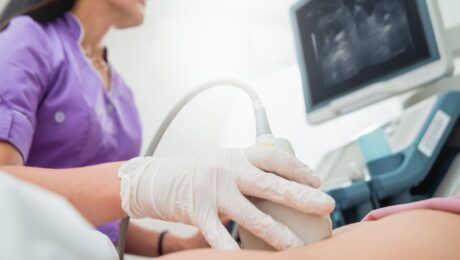
Different parts of the body respond differently when high-frequency ultrasonic waves are passed through them. When ultrasound waves are passed through the body, many tissues reflect sound waves partially and transmit the rest, which are then reflected back from deeper structures. The reflected waves are measured and depending on the time it takes for them to return, the depth of the echo is decided – the intensity decides the greyness of the area.
- Published in Services
DIGITAL X-RAY TEST
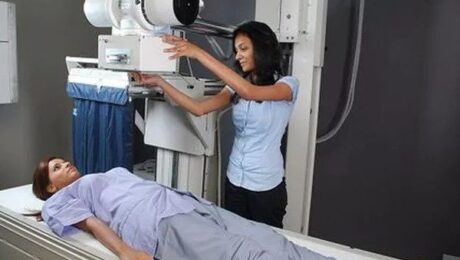
NexusCARE give best services of X-Ray. CR is a form of X-ray imaging, where X-rays images are captured on special cassettes and subsequently modified on the computer before giving the film which is processed by digital cameras. Advantages include time efficiency through bypassing chemical processing and the ability to digitally transfer and enhance images. Also less radiation can be used to produce an image of similar contrast to conventional radiography.
We offer a large portfolio of radiography products, so we’ve developed our website to provide you with essential information that is needed before making a purchase. We not only have great digital x-ray products, we also pride ourselves on offering great service. We offer the latest Digital X-Ray Systems available such as CR, DR and PACS solutions. We offer Digital X-Ray Equipment for Medical, Chiropractic or Veterinary applications. There are many companies that offer radiology equipment, however not every company offers the expertise and support that we offer.
- Published in Services